


Straight vs Knuckle Truck Mounted Crane Boom Types
Views: 0 Author: Site Editor Publish Time: 2026-09-23 Origin: Site


Choosing the wrong lifting equipment can severely hurt your daily payload space, lead to serious operational inefficiencies, and even create major job site safety hazards. Fleet managers and owner-operators frequently struggle with this critical capital investment. A crane is not just a tool; it is the beating heart of your logistical operation. In this comprehensive guide, we will compare the two undisputed heavyweights of the mobile lifting industry: straight and articulating booms. By breaking down technical specifications, mechanical principles, and real-world operator feedback, you will learn how to make a highly cost-effective purchasing decision tailored directly to your daily hauling needs.
Key Takeaways
Terminology matters: The industry uses varied jargon. Straight booms are frequently referred to as stiff, stick, or telescopic booms. Knuckle booms are widely known as articulating or folding booms.
Reach vs. Space: Telescopic models provide superior vertical reach and mechanical simplicity. Conversely, articulating models fold compactly behind the cab, preserving the truck bed's maximum payload capacity.
Specialized capabilities: Your operational environment dictates the ideal choice. Articulating arms excel in tight spaces and port logistics. Rigid arms handle high-altitude construction efficiently.
Operator preference: Field data indicates that while multi-jointed arms require more intensive training, they deliver unmatched flexibility when navigating blind spots and low-clearance urban zones.
Understanding the Basics: What is a Truck Mounted Crane Boom?
To make an informed procurement decision, you must first establish a clear technical understanding of the machinery. A truck mounted crane boom serves as the primary lifting arm attached to a commercial vehicle chassis. It draws power directly from the truck's engine via a Power Take-Off (PTO) unit. Its core function is brilliantly simple yet transformative: it converts a standard transport truck into a dual-purpose powerhouse.
Specifically, this machine can both lift heavy materials and haul them to their final destination. Consequently, this dual capability eliminates the need to dispatch two separate vehicles—a dedicated mobile crane and a flatbed transport truck. This integration slashes fuel consumption, drastically reduces labor costs, and minimizes job site congestion.
The Terminology Matrix
The heavy machinery sector utilizes various regional and technical terms to describe the exact same equipment. This frequently confuses buyers during the procurement process. Mastering these synonyms is critical for accurate equipment sourcing:
Straight Boom Synonyms: Stiff boom, stick boom, telescopic crane. These terms describe a rigid arm that extends in a linear trajectory.
Knuckle Boom Synonyms: Articulating crane, folding boom. These terms refer to an arm featuring multiple hydraulic hinges.
The "Knuckle" Analogy
The unique moniker "knuckle boom" stems directly from the physical mechanics of the machine. The crane features hydraulic hinges that fold in a manner strikingly similar to the joints of a human finger. Just as your finger can curl inward to grasp an object tightly against your palm, the articulating crane folds seamlessly onto itself. This mechanical articulation allows the operator to maneuver heavy loads around scaffolding, over brick walls, and into confined architectural spaces with surgical precision.
Market Dynamics: Industry Trends in Mobile Lifting
Before diving into specific mechanical differences, it is crucial to understand where the industry is heading. Recent market analyses reveal a distinct shift in fleet procurement strategies driven by rapid urban densification. As cities become more congested, municipal regulations regarding traffic blockage and emissions are tightening. Fleet managers are now prioritizing compact, multi-functional equipment over single-purpose machines.
Furthermore, there is a surging demand for payload preservation. Companies want to maximize the ROI of every dispatched truck. This trend is heavily driving the adoption of articulating cranes in urban logistics, waste management, and localized delivery sectors. In contrast, massive infrastructure projects, renewable energy installations (like solar farm construction), and rural utility work continue to lean heavily on telescopic booms. In these open environments, raw vertical reach and the ability to drop loads into deep trenches remain non-negotiable requirements.
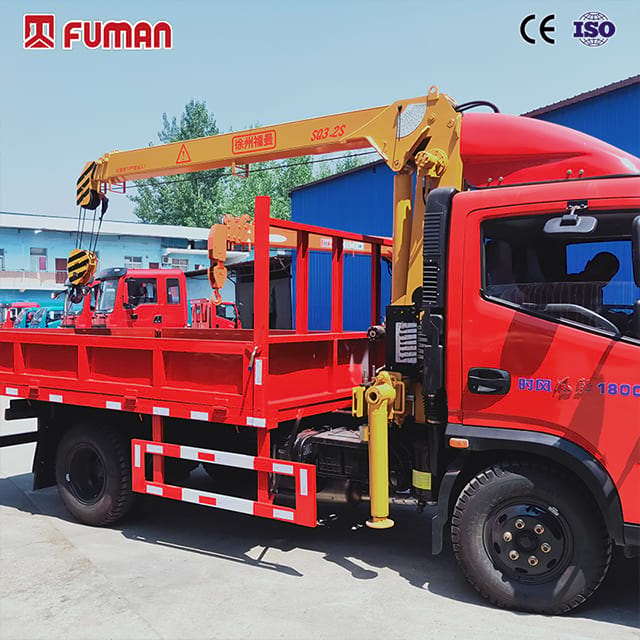
Straight Boom Cranes (Telescopic): Technical Specs and Field Use
Straight boom cranes represent the traditional, time-tested approach to mobile lifting. They consist of a primary main boom with one or more hollow, tubular sections nested neatly inside one another. High-quality models utilize advanced hexagonal or octagonal boom profiles forged from high-tensile steel (such as Q690). This geometric design minimizes boom deflection under heavy loads.
How They Work
Picture a standard job site where a heavy load needs to clear a three-story structure. Here, the linear extension mechanism shines. It is driven by robust internal hydraulic cylinders and heavy-duty planetary gear winches. When the operator engages the controls, the nested sections push outward in a smooth, telescoping action. The entire apparatus operates on a simple pivot point at its base, lifting up and down (luffing) while rotating a full 360 degrees (slewing).
Key Advantages
Maximum Vertical Reach: The rigid, linear design allows these machines to achieve exceptional altitudes. They are incredibly efficient for hoisting roofing materials to elevated decks, reaching over tall security fences, or bridging wide utility trenches.
Simpler Maintenance: Telescopic systems feature fewer exposed moving parts. Because the hydraulic cylinders are largely housed inside the boom, they are protected from job site debris. Mechanical simplicity translates directly to lower routine maintenance bills and minimized downtime.
Ease of Operation: The boom's movement is primarily linear. Crews can master the intuitive winch controls much faster. This gentle learning curve is a major financial benefit for companies dealing with high staff turnover.
Disadvantages
Space Hogging: The most glaring drawback is the physical footprint. When stowed for highway transport, a rigid arm must rest horizontally over the flatbed. This configuration drastically cannibalizes the available cargo area, often preventing the fleet from hauling tall, bulky pallets.
Lack of Flexibility: The uncompromising, straight-line nature of the arm makes it a nightmare to operate in cramped quarters. It simply cannot bend around corners or maneuver safely beneath low warehouse ceilings.
Knuckle Boom Cranes (Articulating): Technical Specs and Field Use
Articulating cranes represent a highly engineered, modern solution. They are specifically designed to maximize logistical efficiency and maneuverability in complex lifting environments. Modern units often feature advanced load-sensing proportional valves, allowing for millimeter-precise movements.
How They Work
Unlike the linear push of a telescopic model, a folding boom crane utilizes a multi-jointed hydraulic framework. The structure is split into a main boom and an outer boom, connected by a heavy-duty hinge (the knuckle). Many advanced models also incorporate telescopic sections at the very end of the outer arm for supplementary reach. This multi-hinged geometry allows the entire apparatus to fold tightly into a compact Z-shape or V-shape behind the cab.
Key Advantages
Maximum Payload Space: The ultimate economic advantage is its stowed profile. By folding neatly behind the cab, it leaves the entire truck bed wide open. Fleet operators can haul maximum cargo payloads on the exact same vehicle performing the lift, effectively doubling operational efficiency.
Unmatched Agility: The hinged joints allow the equipment to navigate baffling spatial constraints. Operators can unfold the arm underneath highway overpasses, inside bustling industrial warehouses, and seamlessly thread loads through narrow upper-story windows.
Favorable Load Curve: Articulating arms are absolute beasts at close horizontal ranges. The specific geometry of the knuckle allows the machine to hoist colossal weights when the load is positioned near the vehicle's center of gravity.
Disadvantages
Higher Initial Cost & Maintenance: Advanced engineering demands a premium price tag. More hydraulic joints inherently mean more steel pins, bushings, and grease points. The labyrinthine routing of hydraulic hoses requires rigorous adherence to preventative maintenance schedules.
Steeper Learning Curve: Manipulating multiple articulating joints simultaneously requires a highly skilled, spatially-aware operator. Achieving fluid, coordinated movements demands extensive training hours.
Specialized Port Operations: Ship Loading and Unloading
The maritime logistics sector presents entirely unique material handling challenges. Modern ports and coastal docks increasingly rely on mobile truck cranes for rapid cargo transfer. This is particularly true for mid-sized facilities that simply cannot justify the astronomical capital expenditure required for massive, stationary gantry cranes. The mobility of truck-mounted units empowers port authorities to deploy lifting capacity dynamically, rolling right up to the dock edge exactly where the vessel is moored.
To optimize these fast-paced maritime environments, selecting the proper truck mounted crane for ship loading and unloading is a critical operational decision that directly impacts vessel turnaround times.
Using Articulating Arms for Cargo Loading
Loading delicate or awkwardly shaped cargo into a vessel requires surgical spatial maneuvering. In these scenarios, a knuckle boom crane for ship cargo loading proves highly effective. The multi-jointed arm can extend outward over the ship's protective hull and then articulate downward deep into the cargo hold. This distinct "up-and-over" capability allows the operator to bypass bulkheads and hatch covers. It places tightly packed maritime equipment precisely where it belongs without dangerous swinging.
Using Telescopic Arms for Unloading Operations
On the flip side, certain unloading procedures benefit immensely from raw linear mechanics. A telescopic cargo crane for ship unloading operations shines when dealing with standardized, heavy loads situated on flat barge decks or open-top vessels. The straight vertical reach is perfect for dropping a hook straight down, securing the cargo, and yanking it straight up and over to the dock in one rapid, continuous motion. This mechanical simplicity facilitates high-speed, repetitive hoisting.
Head-to-Head Comparison: Straight vs. Knuckle Boom
Selecting the ideal equipment requires a direct, uncompromising technical comparison. Fleet managers are increasingly prioritizing payload preservation and maneuverability over sheer vertical extension. Below is an objective breakdown highlighting the core differences in operational capabilities to guide your engineering and procurement teams.
Feature / Capability | Straight Boom (Telescopic) | Knuckle Boom (Articulating) |
|---|---|---|
Lifting Profile | Maintains strength at high altitudes and long distances. | Immense power at close range; capacity drops at full extension. |
Payload Efficiency | Low. The stowed boom occupies valuable truck bed space. | High. Folds tightly behind the cab, preserving the flatbed. |
Maintenance Complexity | Lower. Internal cylinders and fewer exposed moving parts. | Higher. Multiple hinge points require frequent greasing. |
Urban Agility | Poor. Requires large overhead clearance to swing safely. | Excellent. Navigates narrow alleys and low ceilings easily. |
Operator Learning Curve | Gentle. Intuitive linear winch controls. | Steep. Requires coordination of multiple hydraulic joints. |
Real-World Operator Insights: From the Control Seat
Engineering spec sheets only reveal a fraction of the truth. Real-world feedback from seasoned machinery operators uncovers the nuanced, practical realities of daily job site pressures.
The Weather Factor: Extreme cold drastically alters the viscosity of hydraulic fluids. Operators working in freezing northern climates frequently note that articulating arms—with their extensive network of external hoses and multiple cylinders—can become sluggish until the fluid reaches optimal operating temperature. Telescopic models generally achieve operational fluidity much faster on sub-zero mornings due to their simpler hydraulic pathways.
The Urban Jungle: Imagine trying to swing a rigid 40-foot pole in a congested downtown alleyway. It is a logistical nightmare. Field observations in high-density cities highlight the severe spatial limitations of straight booms, which often require blocking active traffic lanes to swing safely. In contrast, operators praise the agility of articulating arms, which can be unfolded and maneuvered entirely within a single parking lane.
The Blind Spot Dilemma: Visibility remains a primary safety hazard during material handling. When placing loads on flat commercial roofs, straight boom operators often cannot see the exact drop zone from the lower control cab. Articulating cranes solve this effectively. Frequently equipped with advanced radio remote controls, the operator can physically walk up to the roof. Standing safely near the drop zone ensures precise, accident-free load placement.
The Buyer’s Decision Framework: Actionable Selection Criteria
Capital investments in heavy machinery demand rigorous financial and operational planning. A well-chosen lifting system will boost your long-term profitability. Follow this analytical framework to determine your ideal fleet solution.
Analyze Your Primary Cargo Needs
Determine immediately if you intend to haul goods on the same vehicle performing the lift. If your business model relies on transporting building supplies and lifting them upon arrival, an articulating arm is the logical choice to maximize bed space. If you merely need a mobile lifting unit to service job sites while separate flatbeds deliver the materials, a telescopic arm offers a highly economical dedicated lifting solution.
Measure Your Jobsite Constraints
Evaluate the physical environments your crews face daily. Are you constantly navigating under low-hanging branches, working indoors, or squeezing into tight urban corridors? These constraints strictly demand the articulation of a folding arm. Alternatively, if your contracts involve five-story truss settings or pulling materials straight up from deep utility trenches, you require the extended vertical dominance of a telescopic system.
Evaluate Your Workforce Capabilities
Assess the technical experience level of your current operators. Managing multiple hydraulic joints simultaneously on a folding crane requires immense skill and spatial awareness. If you boast a stable roster of seasoned veterans, they will maximize an articulating crane's potential. If your company experiences high turnover, the intuitive, linear controls of a straight boom will drastically reduce training time and mitigate job site accidents.
Calculate Total Cost of Ownership (TCO)
Never base your procurement decision solely on the initial sticker price. Articulating models generally carry higher upfront costs and incur steeper annual maintenance bills due to their complex joints. However, they claw back that money by saving fuel—you won't need to dispatch a secondary transport truck for cargo. Balance these long-term financial factors against your specific daily operational workflow.
Conclusion & Next Steps
Ultimately, selecting the correct lifting equipment dictates your operational success and bottom-line profitability. Telescopic systems offer unmatched vertical reach, mechanical simplicity, and ease of use for high-altitude or deep-trench lifts. Furthermore, articulating systems provide superior payload preservation, incredible close-quarters strength, and the agility necessary to conquer modern urban and maritime logistics.
Carefully evaluate your specific job site constraints, analyze your workforce's capabilities, and calculate the holistic long-term maintenance costs before finalizing your purchase. By aligning the machine's geometric strengths with your daily pain points, you will secure a powerful asset that drives your business forward. To explore premium, highly engineered lifting solutions tailored to these exact needs, review the robust equipment configurations available at FUMAN Crane to find the perfect match for your fleet.
FAQ
Can a knuckle boom crane lift as much as a straight boom crane?
Yes, at close ranges, articulating models can lift massive amounts of weight, leveraging their folded geometry for incredible close-quarter strength. However, straight models maintain their structural lifting capacity much better at extended vertical heights and long horizontal distances. Your most frequent required lifting radius will dictate which machine is functionally stronger for your daily needs.
Which truck mounted crane boom is better for ship loading and unloading?
The optimal choice depends entirely on the vessel type and cargo placement. Articulating models are vastly superior for reaching deep into confined cargo holds and maneuvering around complex maritime bulkheads. Conversely, telescopic models are much better suited for rapid, straight vertical lifts, making them ideal for pulling heavy pallets directly off a flat open barge deck.
Are knuckle boom cranes more expensive to maintain?
Generally speaking, yes. They feature multiple hydraulic cylinders, steel pins, and intricate bushings that form the "knuckles." These complex, moving joints require rigorous, frequent greasing and careful inspection to prevent premature wear. Straight models possess fewer moving parts exposed to the elements, which usually results in lower, more predictable annual maintenance bills.
How does the boom profile (hexagonal vs. octagonal) affect lifting performance?
The cross-sectional shape of a telescopic boom directly impacts its structural integrity. Hexagonal and octagonal profiles distribute stress much more evenly than older rectangular designs. This engineering prevents boom deflection (bending) under heavy loads and allows the crane to utilize lighter, high-tensile steel, which ultimately increases the truck's available payload capacity.
What is the average lifespan of a truck-mounted crane?
With rigorous preventative maintenance, a high-quality truck-mounted crane can reliably operate for 10 to 15 years. The lifespan heavily depends on the operating environment, adherence to safe load charts, and the frequency of hydraulic fluid and filter changes. Often, the crane mechanism outlasts the commercial truck chassis it is mounted on.
Do I need a special license to operate a truck mounted crane?
Yes, most jurisdictions strictly require specific heavy equipment certifications to ensure safety and liability compliance. In the United States, for example, NCCCO certification is widely mandated. The exact requirements often vary based on the crane's maximum lifting capacity and specific local laws. Always consult your regional regulatory body to ensure your operators are fully compliant before initiating any heavy lifting operations.


