


Truck Mounted Crane Boom Specs Buyers Should Compare
Views: 0 Author: Site Editor Publish Time: 2026-09-30 Origin: Site


Specifying the wrong crane boom wastes capital. It also causes critical project delays. Choosing heavy lifting equipment is a high-stakes engineering decision. Whether you manage a bustling maritime terminal or outfit a municipal utility fleet, purchasing mismatched machinery leads to severe operational bottlenecks and safety hazards.
Fleet managers and procurement teams often struggle to navigate complex hydraulic variations, load charts, and chassis requirements. Incorrect specifications inevitably result in equipment that either stalls during daily operations or violates local highway axle-weight regulations. In this comprehensive guide, we break down exactly which truck-mounted lifting specifications you must evaluate to make a data-driven, future-proof investment.
Key Takeaways
Capacity & Reach: The two most critical metrics are maximum lifting capacity (at a specific radius) and the maximum horizontal/vertical boom extension.
Boom Architecture: Choosing between a telescopic (stiff) boom and a knuckle (articulating) boom depends entirely on your spatial constraints and cargo profile.
Fluid Power: A robust, well-cooled hydraulic system is non-negotiable. Continuous cargo handling requires advanced thermal management to prevent overheating.
Harbor-Ready Specs: Port operations demand specialized engineering. Partnering with a specialized manufacturer ensures marine-grade durability, such as C5-M anti-corrosion protection.
Chassis Integration: The commercial truck chassis must possess the appropriate Gross Vehicle Weight Rating (GVWR) to safely support the crane's dead weight, subframe, and active payload.
Understanding the Basics: What is a Truck Mounted Crane Boom?
At its core, a truck-mounted crane boom is a heavy-duty, extendable mechanical arm integrated with a commercial vehicle chassis. Engineered specifically for lifting, suspending, and precise material placement, this equipment bridges the gap between stationary tower cranes and traditional flatbed transport. Unlike standard mobile cranes that rely on slow-moving, custom-built carriers, truck-mounted variants offer highway mobility combined with robust lifting power.
To evaluate these machines properly, you must understand their core anatomy. The system relies on a stable base and mast. Boom cylinders dictate the angle of elevation. A hydraulic pump, driven by the truck’s Power Take-Off (PTO), provides the fluid muscle. A winch and wire rope assembly handles vertical lifting, while outriggers provide crucial ground stabilization. When you stand on a job site and hear the deep rumble of the PTO engaging, you are witnessing a precise balance of mechanical leverage and fluid dynamics.
Specifications matter immensely here. Buyers face a constant tug-of-war between road legality and lifting muscle. A heavier, more powerful boom naturally requires a larger chassis. Consequently, if the combined weight exceeds local axle load limits, the vehicle becomes illegal for highway transport. Conversely, under-specifying the boom to save on initial costs leaves your crew with an underpowered machine that stalls daily workflows.
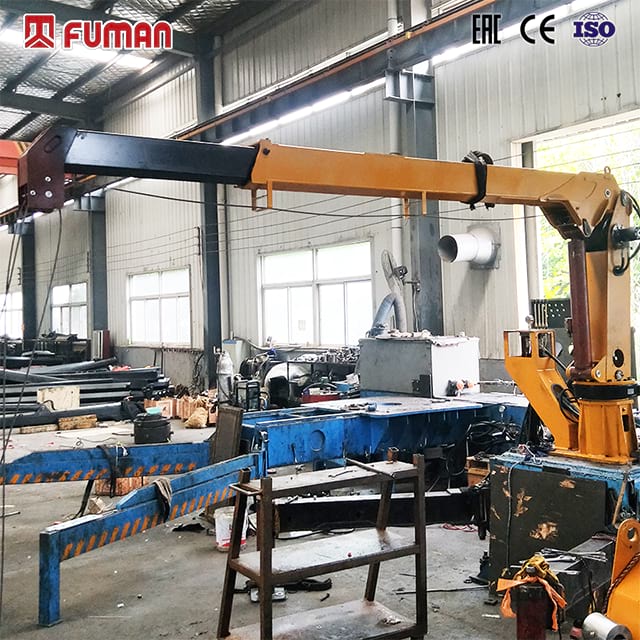
Current Industry Trends Shaping Crane Specifications
Before diving into raw numbers, it is vital to understand the macro trends influencing modern crane engineering. Recent market analyses indicate a massive shift toward high-yield, lightweight steel alloys. As global emission regulations tighten, fleet managers scrutinize boom deadweight to maximize chassis payload and reduce truck fuel consumption.
In addition, the integration of smart telematics is no longer a premium add-on; it is an industry standard. Modern lifting equipment now features advanced Load Moment Indicators (LMI) that provide real-time data on boom angle, radius, and load weight directly to the operator's display. This shift toward digitalization significantly reduces tipping accidents and equipment fatigue, making safety systems a primary focal point during the procurement process.
Key Truck Mounted Crane Boom Specs to Compare
When evaluating spec sheets from competing brands, the sheer volume of data can be paralyzing. To cut through the noise, focus on the following critical engineering specifications.
Maximum Lifting Capacity (Tonnage and Moment Rating)
The baseline metric for any crane is its lifting capacity, yet it remains frequently misunderstood. You must carefully dissect the manufacturer's load chart. The advertised "maximum capacity" (for instance, 10 tons) is typically only achievable at the shortest boom length and the closest radius to the center pin. As the arm extends horizontally, leverage physics dictate that capacity drops exponentially. Therefore, calculate your required capacity based on your heaviest load at the maximum required distance, rather than just the load's static weight.
Boom Reach and Sectional Profile
Reach specifications are divided into maximum horizontal reach and vertical lift. Horizontal reach dictates how far away from the truck the crane can pick up a load. Vertical lift determines elevation capability. Pay close attention to the boom profile. Modern manufacturers have moved away from traditional rectangular sections, favoring hexagonal or octagonal profiles. These multi-sided designs distribute mechanical stress more evenly across the steel plates, drastically reducing deflection under heavy loads.
Hydraulic System Pressure and Flow Rate
Think of the hydraulic system as the central nervous system of the machine. Compare the operating pressure (measured in MPa or PSI) alongside the flow rate (measured in LPM or GPM). Higher pressure allows the cylinders to force heavier loads upward. A higher flow rate dictates the speed and fluidity of the boom's movement. For continuous operations, verify the inclusion of high-capacity hydraulic oil coolers. Without adequate thermal management, fluid flow generates excessive heat, leading to sluggish performance and rapid seal wear.
Rotation Angle and Swing Torque
Rotation specifications define your functional working area. Some models offer continuous 360-degree rotation utilizing a specialized slew ring and hydraulic swivel. This is highly efficient for complex, multi-directional job sites. Others are restricted to 400 degrees of non-continuous rotation. Additionally, check the swing torque. High swing torque ensures the machinery rotates smoothly even when the truck is parked on a slight incline or battling high coastal winds.
Outrigger Span (Stabilization Footprint)
Lifting capacity is directly tied to ground stability. Comparing the maximum outrigger span is crucial. A wider stance provides a larger stabilization footprint, allowing for heavier lifts at greater distances. However, if your crews work in narrow urban alleys or congested dockyards, ensure the fully deployed span does not exceed your spatial constraints. Multi-stage outriggers offering variable deployment widths are an excellent solution.
Telescopic vs. Knuckle Boom: Direct Selection Standards
One of the most frequent purchasing dilemmas is choosing between a telescopic (stiff) boom and an articulating (knuckle) boom. This decision should never be based on price alone. It depends entirely on your daily operational workflow.
When to Choose a Stiff Boom (Telescopic)
Telescopic variants operate using a straight, extendable arm paired with a hydraulic winch and wire rope system. They excel at straight, high vertical lifts. If your primary task involves lowering materials deep into trenches, utility holes, or ship holds, a telescopic boom is ideal. Because the load is suspended from a cable, operators achieve highly delicate vertical placement without moving the heavy arm itself.
When to Choose an Articulating (Knuckle) Boom
In contrast, knuckle booms feature a jointed arm that folds similarly to a human finger. This design allows unparalleled maneuverability in tight, low-clearance spaces. These models fold compactly behind the truck cab, leaving the majority of the truck bed free for transporting payloads. They typically do not rely on a winch. The load is held rigidly at the end of the arm, making it perfect for precise horizontal placement.
Core Comparison Matrix
Engineering Feature | Telescopic (Stiff) Boom | Articulating (Knuckle) Boom |
|---|---|---|
Primary Lifting Mechanism | Winch and wire rope | Hydraulic articulation cylinders |
Vertical Reach Dynamics | Exceptional (deep lowering capabilities) | Moderate (limited by joint angles) |
Placement Precision | Moderate (load swings on cable) | Exceptional (rigid attachment) |
Chassis Deck Utilization | Requires boom rest over the bed | Folds compactly behind cab |
Maintenance Complexity | Lower (fewer pivot points) | Higher (multiple pins and bushings) |
Matching Specs to Harsh Port and Maritime Operations
Equipment specifications are not universally applicable. Transitioning from a standard construction site to a maritime environment introduces severe operational challenges. High salinity, constant moisture, and rigorous continuous-duty cycles will destroy standard commercial machinery in months.
To survive harbor conditions, buyers must prioritize specific marine-grade enhancements. Look for multi-layer anti-corrosion marine coatings, stainless steel hydraulic fittings, and high-speed winches for rapid ship-to-shore cargo transfers. Long horizontal reaches are necessary to clear ship railings and access deep cargo holds. For versatile dockside tasks, integrating a specialized Ship Telescopic Boom Crane provides the required balance of reach and durability without overwhelming existing dock infrastructure.
Evaluating a Truck-mounted crane arm manufacturer for port lifting
Finding the right supplier requires a strict evaluation of their engineering capabilities and material treatments. When sourcing from a Truck-mounted crane arm manufacturer for port lifting, scrutinize the anti-corrosion measures applied to the steel components. Industry-standard protection involves C5-M marine coating systems, starting with a zinc-rich epoxy primer followed by polyurethane topcoats.
Take an 8-ton telescopic model as an example. An optimized 8-ton unit designed for ports should feature a robust lifting moment and a maximum outreach of 10 to 15 meters. Furthermore, exposed components such as cylinder rods must feature advanced nickel-chromium plating to prevent pitting and seal damage from salt spray. Inquire whether the factory can integrate specialized lifting attachments, like clamshell buckets, directly into the hydraulic architecture.
Sourcing a Hydraulic port crane boom manufacturer for cargo handling
The fluid power system is the lifeblood of heavy lifting. For maritime logistics, the demands placed on these systems are exponentially higher due to repetitive, heavy-load operations. Identifying a competent Hydraulic port crane boom manufacturer for cargo handling involves ensuring the hydraulic architecture won't experience pressure drops mid-shift.
Cargo handling requires smooth, proportional control to avoid swinging loads that could damage the vessel. For heavier 12-ton models, buyers should look for manufacturers utilizing load-sensing variable displacement piston pumps rather than standard gear pumps. These advanced systems adjust fluid flow dynamically based on load weight, reducing heat generation. Top-tier manufacturers also integrate high-capacity oil coolers with thermostatically controlled fans, maintaining optimal fluid viscosity during prolonged ship-to-shore transfers.
Procuring from a Telescopic crane boom manufacturer for port operations
While articulating designs have their place in logistics, stiff-arm variants are often the preferred choice for deep-reach dockside tasks. Partnering with a specialized Telescopic crane boom manufacturer for port operations ensures the equipment is engineered for the unique spatial constraints of a harbor.
These designs excel at straight-line vertical lifting. When lowering cargo into narrow ship holds, the arm must extend downward without joints getting caught on the ship's coaming. To achieve massive reach without adding crippling deadweight, premium manufacturers utilize high-tensile strength steel alloys like Weldox. This reduces the physical weight of the boom while maximizing structural yield strength. Combined with hexagonal boom profiles, this engineering drastically reduces the risk of buckling under heavy marine loads.
Conclusion
Comparing specifications meticulously is the only reliable way to ensure a solid return on your heavy equipment investment. While it is tempting to focus solely on maximum tonnage, real-world efficiency is dictated by the interplay between boom reach, hydraulic cooling capacity, and precise chassis compatibility.
Remember that the cheapest upfront option often costs exponentially more in unplanned maintenance and operational downtime later. Always prioritize high-quality materials, advanced safety systems, and reputable manufacturers who understand the specific environmental challenges of your industry. By matching the perfect lifting arm to your exact logistical needs, you safeguard your crew and streamline daily operations. If you are ready to upgrade your fleet with marine-grade, high-performance lifting solutions, evaluate your project requirements and explore the robust configurations available at fumancrane.com.
FAQ
What is the difference between a boom truck and a truck crane?
While often used interchangeably in casual conversation, these are distinct pieces of equipment. A boom truck typically consists of a standard commercial truck chassis (like a flatbed) with a crane mounted on the rear or behind the cab. This design allows the vehicle to both lift heavy loads and transport that cargo on its own deck. A truck crane, conversely, is a purpose-built lifting machine. It features a custom-engineered chassis designed exclusively to support the crane's weight and lifting operations, offering much higher lifting capacities but lacking deck space for transporting cargo.
How do I accurately read a crane load chart?
Reading a load chart requires cross-referencing two main data points: the boom length (extension) and the operating radius (distance from the crane's center of rotation to the load). You must find the intersection of these two numbers on the chart to determine the safe working load limit. Never rely solely on the crane's maximum rated capacity, as that figure only applies when the boom is fully retracted and positioned at the shortest possible radius.
What hydraulic pressure is standard for truck-mounted cranes?
Operating pressures vary based on the crane's size and design, but modern truck-mounted cranes typically operate within a range of 20 MPa to 30 MPa (approximately 2,900 to 4,350 PSI). Heavy-duty port cranes and high-capacity telescopic models often push toward the higher end of this spectrum to maximize lifting force, which is why integrated oil coolers and high-pressure hoses are critical for safe operation.
How much lifting capacity do I need for port cargo handling?
The required capacity depends entirely on the specific cargo and operational radius. For general break-bulk cargo, palletized goods, and smaller machinery handling, port operations frequently utilize cranes ranging from 8-ton to 12-ton capacities. It is crucial to consult the load chart. If you need to lift 8 tons at a distance of 10 meters, you will require a machine with a significantly higher maximum baseline capacity (e.g., a 16-ton or 20-ton rated crane).
How long does a truck mounted crane boom last?
The lifespan depends heavily on the operating environment, duty cycle, and strict adherence to maintenance schedules. In harsh marine environments, saltwater corrosion accelerates wear. However, with rigorous maintenance—including regular hydraulic fluid analysis, timely filter replacements, greasing of telescopic wear pads, and routine structural inspections—a high-quality unit manufactured with high-tensile steel and C5-M marine coatings can reliably operate for 10 to 15 years.
Can I mount a new crane boom on an older truck chassis?
Yes, retrofitting is possible, but strict engineering criteria must be met. The older truck must have a Gross Vehicle Weight Rating (GVWR) capable of safely supporting the crane, the sub-frame, and the intended payload. The truck's frame rails must be structurally sound and free of fatigue cracks. Finally, the transmission must have a compatible Power Take-Off (PTO) provision capable of driving the hydraulic pump at the required flow rate and pressure.


