


What Is The Boom of A Marine Crane
Views: 0 Author: Site Editor Publish Time: 2025-11-03 Origin: Site


Ever wondered how massive ships transport heavy cargo across the seas? Marine cranes play a crucial role. These cranes, especially the marine cranes boom, are vital for loading and unloading cargo efficiently. In this post, you'll learn about the importance of marine cranes and get an overview of the marine crane boom, including its components and functions.
Understanding the Marine Crane Boom
Definition and Purpose of a Marine Crane Boom
A marine crane boom is a vital part of a ship's crane system. It is the long, horizontal arm that extends outward from the crane's base, enabling the crane to reach and lift loads over a wide area. Its primary purpose is to facilitate the safe and efficient movement of cargo, equipment, or other heavy objects on ships, offshore platforms, or dockyards.
Unlike terrestrial crane booms, marine crane booms are specially designed to withstand harsh maritime conditions. They are constructed from high-strength materials like carbon steel or low-alloy steel, which provide robustness and resistance to corrosion caused by saltwater exposure. The boom's design allows it to handle various load types, from containers to heavy machinery, with precision and stability.
Components of a Marine Crane Boom
A typical marine crane boom consists of several key components:
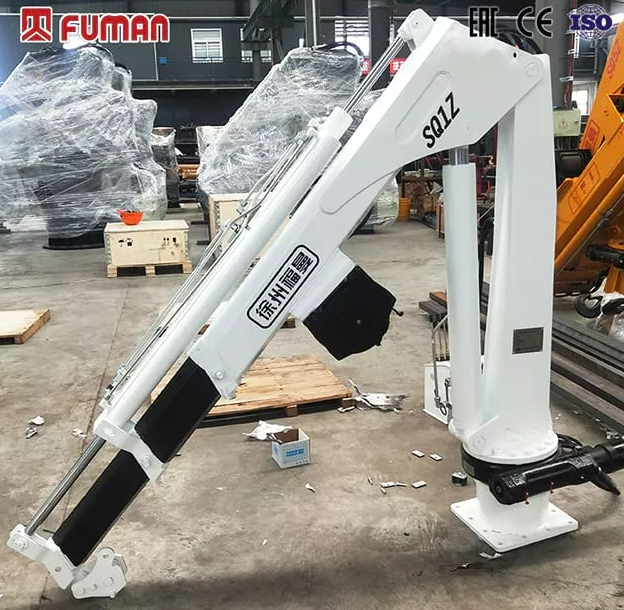
● Main Boom: The primary horizontal arm that extends from the crane base. It can be fixed, telescopic, folding, or knuckle-type, depending on the crane's design.
● Hydraulic Cylinders: These power the extension, retraction, and movement of the boom segments. They convert hydraulic pressure into mechanical motion.
● Lifting Hook: Attached at the end of the boom, this is where loads are connected via slings or chains for lifting.
● Slewing Ring: Located at the base, it allows the boom to rotate 360 degrees, providing a wide operational radius.
● Boom Rest: A support feature that locks the boom in place when not in use, preventing unwanted swinging or movement.
● Control Systems: Located in the operator's cab, these control the hydraulic cylinders, boom rotation, and other movements to ensure precise handling.
The design and quality of these components are crucial for safe operation, especially in marine environments where wind, waves, and corrosion pose additional challenges.
Types of Marine Crane Booms
Marine crane booms come in several types, each designed to suit specific lifting tasks and space constraints. Understanding these types helps in selecting the right boom for your marine operations.
Stiff Boom
The stiff boom is a fixed-length, solid arm. It's simple, low-cost, and easy to maintain. This type suits straightforward lifting jobs where reach doesn't need adjusting. However, it offers limited lifting points and occupies more deck space. Its rigidity ensures stability but reduces flexibility.
Telescopic Boom
Telescopic booms consist of multiple nested sections that slide in and out like a telescope. This design allows operators to extend or retract the boom length as needed. It’s highly flexible, making it popular for offshore tasks and port operations. The hydraulic system powers smooth, controlled extension and retraction, enabling variable reach in confined spaces.
Folding Boom
A folding boom features hinged sections connected by hydraulic cylinders, allowing the boom to fold compactly. This design saves space, ideal for crowded dockyards or ships with limited deck area. It operates faster than stiff booms and can maneuver in tight spaces. However, its hydraulic system operates under higher pressure, often requiring linkage mechanisms to reduce cylinder stress.
Knuckle Boom
Knuckle booms have jointed sections resembling fingers that fold back on themselves. Multiple hydraulic cylinders control these articulated "knuckles," granting exceptional maneuverability. This boom type saves space and offers an extended working range. It's especially useful for precise load placement in complex marine environments.
Lattice Boom
Lattice booms are built from steel sections arranged in a crisscross pattern. This structure provides high strength and stability while keeping weight low. Lattice booms can be extended by adding segments, making them suitable for heavy lifts and long reach. They are common on offshore platforms and crane barges, excelling in heavy-duty marine lifting tasks.
How Marine Crane Booms Work
Mechanics of Crane Boom Operation
Marine crane booms function as the main arm that lifts and moves heavy loads on ships or offshore platforms. The boom acts like a lever, transferring force from the crane base to the load. Operators control the boom’s angle and extension to position loads precisely. The boom rotates around a slewing ring at its base, allowing 360-degree movement. This rotation, combined with boom extension and lifting, enables the crane to cover a wide working area.
The boom must handle both static and dynamic forces. Static forces include the weight of the load and the boom itself. Dynamic forces arise from movements like lifting, lowering, or swinging the load. These forces require the boom to be strong and flexible, absorbing shocks while maintaining stability. Proper design ensures the boom withstands bending and compressive stresses during operation.
Hydraulic Systems in Crane Booms
Hydraulic systems power most modern marine crane booms. These systems use pressurized hydraulic fluid to move pistons inside cylinders. When the operator activates controls, hydraulic pumps push fluid into cylinders, causing the boom sections to extend or retract smoothly. Hydraulics also control the boom’s luffing (raising and lowering) and slewing (rotation).
Hydraulic power offers precise control and significant lifting force in a compact system. The fluid’s pressure translates into mechanical movement, allowing the boom to adjust length and angle quickly and safely. Hydraulic valves regulate flow, ensuring smooth, coordinated motions. Regular maintenance of hydraulic components is essential to prevent leaks and maintain system reliability.
Control and Safety Features
Operators control the boom from a cabin using joysticks or levers linked to the hydraulic system. Modern cranes often include electronic control systems that provide feedback and assist with precise movements. These systems may feature programmable limits to prevent overextension or unsafe angles.
Safety systems monitor load weight, boom position, and environmental conditions. Overload protection prevents lifting beyond rated capacity, reducing risk of structural failure. Sensors detect excessive wind speeds or boom vibrations, triggering alarms or automatic shutdowns to protect personnel and equipment. Boom rests lock the boom securely when not in use, preventing unwanted movement during rough seas.
Extending and Retracting the Crane Boom
Hydraulic Extension Mechanism
Marine crane booms extend and retract primarily through hydraulic systems. These systems use pressurized hydraulic fluid to move pistons inside cylinders. When the operator activates the controls, hydraulic pumps push fluid into these cylinders, causing the boom sections to slide out or pull back in smoothly. This mechanism allows precise control over the boom length, enabling the crane to reach different distances as needed.
Hydraulic cylinders are designed to handle the heavy loads and stresses encountered at sea. They provide strong, reliable force while maintaining smooth and steady motion. The telescopic boom, for example, consists of multiple nested sections powered by these hydraulic cylinders. As fluid pressure increases, pistons push the inner sections outward, extending the boom. Releasing pressure allows the boom to retract safely.
The hydraulic system includes valves to regulate fluid flow and maintain steady movement. It also features safety devices to prevent sudden or uncontrolled extension or retraction. Regular maintenance of seals, hoses, and pumps ensures the system stays leak-free and responsive.
Role of the Crane Operator
The crane operator plays a critical role in managing boom extension and retraction. Using control levers or joysticks inside the operator’s cabin, they regulate hydraulic pressure to adjust the boom length. Operators must carefully coordinate boom movements with load handling, vessel motion, and environmental conditions.
Operators monitor boom position, load weight, and surrounding obstacles to avoid collisions or overextension. They adjust boom length to optimize reach without compromising stability. For example, extending the boom too far with a heavy load can stress the crane structure or reduce safety margins.
Experienced operators also respond to sea conditions like wind and waves, which affect boom movement. They use smooth, gradual hydraulic control to minimize swinging or jolting of the load. In some modern cranes, electronic systems assist operators by providing feedback on boom position and load capacity.
Ensuring Safe Operations
Safety is paramount when extending or retracting a marine crane boom. Several measures help ensure secure operation:
● Load Monitoring: Sensors measure load weight and boom angle, alerting operators to overload risks.
● Limit Switches: These devices prevent the boom from extending beyond safe mechanical limits.
● Boom Resting Systems: When not in use, the boom is locked securely to avoid swinging caused by ship motion.
● Hydraulic Pressure Relief: Valves release excess pressure to prevent cylinder damage.
● Operator Training: Skilled operators understand hydraulic controls and emergency procedures.
● Regular Inspections: Routine checks of hydraulic components, seals, and structural parts catch wear or damage early.
Together, these safety features minimize risks during boom extension or retraction, protecting crew, cargo, and equipment.
Materials and Construction of Crane Booms
High-Strength Steel Alloys
The core of any marine crane boom is its material. High-strength steel alloys are the preferred choice. These steels, such as low-alloy steels like Q355 or HG785, combine exceptional load-bearing capacity with durability. Their strength allows the boom to lift heavy loads without bending or breaking. Plus, they are lightweight relative to their strength, which is crucial for marine applications where weight impacts stability and fuel efficiency. These steels are carefully welded and formed to ensure maximum integrity, even under extreme conditions at sea.
Corrosion Resistance in Marine Environments
Saltwater and salty air pose significant challenges for metal structures. To combat this, crane booms are coated with multi-layer protective systems. These coatings include corrosion-resistant paints and sealants that form a barrier against moisture and salt. Some modern booms incorporate corrosion-resistant alloys or even carbon fiber composites in specific sections. These materials not only resist rust but also help maintain the boom's structural integrity over long periods. Proper surface treatment and ongoing maintenance are essential to prevent deterioration, which could compromise safety and operational efficiency.
Impact of Material Choice on Performance
Material selection directly affects a crane boom's performance, lifespan, and safety. High-quality steel alloys ensure the boom can handle static and dynamic loads while resisting fatigue from repeated use. Corrosion-resistant coatings extend service life, especially in harsh marine environments. Using lightweight yet strong materials reduces the overall weight, making transportation and installation easier, while also improving the crane's stability during operations. Advanced composites can further reduce weight and vibration, leading to smoother, safer lifting processes. In short, optimal material choice balances strength, durability, and weight, ensuring the crane operates reliably over many years.
Additional Considerations
The construction process also involves sophisticated welding techniques and precise manufacturing methods. Modern cranes often use computer-aided design (CAD) and finite element analysis (FEA) to optimize the boom's structure. These tools help engineers identify stress points and improve design before production. Regular inspections, maintenance, and surface treatments keep the boom in top condition, preventing costly failures at sea.
Applications of Marine Crane Booms
Cargo Handling on Ships
Marine crane booms play a vital role in cargo handling on ships. They enable the efficient loading and unloading of containers, bulk materials, and heavy equipment. The boom's reach and lifting capacity allow crews to transfer goods from dockside to ship decks quickly and safely. For example, container ships rely on telescopic or lattice booms to handle standardized cargo efficiently, reducing turnaround times in busy ports. The ability to precisely position loads minimizes damage risks, ensuring cargo arrives intact. Moreover, modern cranes incorporate advanced control systems, helping operators manage heavy loads with greater accuracy, even in challenging sea conditions. This improves operational safety and productivity during port operations.
Offshore Operations
Offshore industries depend heavily on specialized marine crane booms. These cranes support oil rigs, wind farms, and floating platforms. Their primary functions include installing heavy equipment, maintaining offshore structures, and deploying supplies. Knuckle and telescopic booms are common here because they adapt well to tight spaces and variable load requirements. Hydraulic extension mechanisms allow quick adjustments, saving valuable time during critical operations. The robust construction from high-strength steel and corrosion-resistant materials ensures durability against saltwater, wind, and waves. For instance, offshore wind turbine assembly often uses lattice booms for lifting massive blades and towers. The ability to operate safely in harsh environments makes these cranes indispensable for offshore projects.
Construction and Infrastructure Projects
Marine crane booms also support construction projects near water bodies. They lift building materials, steel beams, and heavy machinery to high or hard-to-reach places. Ports often use these cranes for constructing bridges, piers, or waterfront buildings. Their versatility allows them to handle different load types efficiently. Folding and knuckle booms are especially useful in crowded or confined spaces, thanks to their space-saving designs and high maneuverability. For example, during port expansion, cranes with lattice booms can lift and position large steel sections with precision. Their advanced safety features, such as overload protection and load monitoring, help prevent accidents. The durability of high-strength steel and corrosion-resistant coatings ensures long-term performance in marine environments.
Conclusion
Marine crane booms, crucial for maritime operations, come in various types for specific tasks and constraints. They are designed to withstand harsh marine conditions, ensuring safe and efficient cargo handling. Future trends in marine crane boom technology focus on enhanced materials and automation for better performance and safety. FUMAN provides innovative marine crane solutions, offering durable and efficient products tailored to meet diverse operational needs, ensuring reliability and value in challenging marine environments.
FAQ
Q: What is a marine crane boom?
A: A marine crane boom is the long, horizontal arm of a vessel crane, crucial for lifting and moving loads on ships and offshore platforms.
Q: How does a vessel crane boom operate?
A: A vessel crane boom operates using hydraulic systems for extension, retraction, and movement, allowing precise load handling.
Q: Why are marine crane booms made from high-strength steel?
A: Marine crane booms use high-strength steel for durability and corrosion resistance in harsh maritime conditions.
Q: What are the benefits of a telescopic marine crane boom?
A: Telescopic booms offer flexibility in reach, making them ideal for confined spaces and variable load tasks.


