


How Does Marine Crane Boom Work
Views: 0 Author: Site Editor Publish Time: 2025-11-15 Origin: Site


Imagine lifting massive loads at sea with precision and safety. Marine cranes boom make this possible. This article explores how these booms work, their importance in marine operations, and the components that ensure their functionality. You'll learn about the hydraulic systems, telescopic mechanics, and safety features that enable these cranes to operate efficiently in challenging environments.
Components of Marine Crane Boom
A marine crane boom is a complex assembly designed to lift and move heavy loads safely and efficiently on ships and offshore platforms. Understanding its components helps grasp how it manages these demanding tasks.
Base Section
The base section forms the sturdy foundation of the boom. It connects directly to the crane's main structure, supporting the weight and forces during lifting. This section must be robust, often constructed from high-strength steel, to withstand static loads from the boom itself and dynamic loads during operations. It anchors the boom securely and provides the pivot point for movement.
Telescoping Sections
Many marine crane booms use telescoping sections to extend or retract the boom length. These nested segments slide within each other like a telescope, allowing the boom to reach varying distances. Telescoping sections are guided by rollers or sliding pads to reduce friction and wear. They provide versatility, enabling the crane to work in tight spaces or reach far-off loads without moving the whole crane.
Hydraulic Cylinders
Hydraulic cylinders are the muscle behind the boom's movement. They use pressurized fluid to push or pull the telescoping sections, controlling extension and retraction smoothly. These cylinders also adjust the boom's angle, lifting or lowering it as needed. The hydraulic system provides precise control and the power needed to handle heavy loads safely.
Locking Mechanisms
Once extended or positioned, the boom sections must stay securely in place. Locking mechanisms, such as pins or hydraulic locks, engage to hold each section firmly. These prevent unintended movement or collapse under load, ensuring stability and safety during lifting. They act like brakes for the boom sections.
Cables and Sheaves
Cables and sheaves form the lifting and load-handling system. Steel cables run over sheaves (pulleys) mounted on the boom, guiding the load hook or lifting gear. The sheaves reduce friction and distribute the load evenly across the boom structure. Regular inspection of cables and sheaves is crucial since wear or damage can compromise safety.
How Does Marine Crane Boom Work
Understanding how a marine crane boom operates involves exploring its hydraulic system, telescopic mechanics, and safety features. These elements work together to enable precise, powerful lifting in challenging marine environments.
Hydraulic System Functionality
The core of a marine crane boom's operation is its hydraulic system. This system uses pressurized hydraulic fluid—usually oil—to generate large amounts of force. Pumps push the hydraulic fluid into cylinders containing pistons. When fluid enters a cylinder, it pushes the piston, causing movement.
This movement extends or retracts the boom sections or adjusts the boom's angle. Hydraulic cylinders act like muscles, providing smooth, controlled motion. They allow the crane to lift heavy loads safely and precisely, even in the unpredictable conditions at sea.
Modern hydraulic systems are equipped with sensors that monitor pressure and flow, ensuring optimal performance. If a pressure spike or drop occurs, the system automatically adjusts to prevent overloads or failures.
Telescopic Boom Mechanics
The telescopic boom is a key feature that provides flexibility in reach and height. It consists of multiple nested sections that slide in and out, similar to a telescope. When extended, these sections allow the crane to reach far distances or high elevations without moving the entire structure.
Here's how it works:
● The operator activates hydraulic controls.
● Hydraulic cylinders push the innermost section outward.
● Locking mechanisms engage to hold each section securely.
● As the boom extends, the sections slide smoothly over rollers or sliding pads, reducing friction.
● To retract, hydraulic pressure is released, and gravity helps the sections nest back in place.
This design offers significant advantages. It allows for adjustable reach, precise positioning, and compact storage when retracted. The extension and retraction are carefully controlled to prevent sudden movements, protecting both the load and personnel.
Safety Mechanisms During Operation
Safety is paramount when operating a marine crane boom. Several features work together to prevent accidents and ensure stability:
● Load Moment Indicators (LMI): These sensors monitor the weight being lifted. If the load approaches the crane's maximum capacity, the system alerts the operator or automatically halts operations.
● Anti-Two Block Systems: These prevent the hook block from contacting the boom tip, which can cause damage or failure.
● Wind Speed Sensors: Since wind can destabilize loads, sensors detect dangerous conditions. If wind speeds exceed safe limits, lifting operations are automatically suspended.
● Emergency Stop Controls: Easily accessible buttons allow operators to halt all movement instantly if needed.
● Locking Mechanisms: Hydraulic locks or pins secure each boom section during extension or retraction, preventing unintended movement under load.
Regular maintenance of these safety systems is essential. Operators must be trained to recognize warning signals and respond appropriately. Proper use of safety features protects everyone on board and prolongs the lifespan of the crane.
Types of Marine Crane Booms
Marine cranes come in several designs, each suited for specific tasks and environments. The most common types include telescopic booms, lattice boom structures, folding crane booms, and fixed crane booms. Understanding their differences helps in selecting the right crane for a particular application.
Telescopic Booms
Telescopic booms are highly versatile due to their extendable design. They consist of multiple nested sections that slide in and out, much like a telescope. This allows operators to adjust the boom length according to the load's position and height requirements. Hydraulic cylinders drive this extension and retraction process, providing smooth and precise movement. When retracted, the boom becomes compact, making transportation and storage easier. Telescopic booms are ideal for tasks requiring variable reach, such as loading cargo on ships or reaching high points on offshore platforms.
Lattice Boom Structures
Lattice booms are constructed from a network of steel struts arranged in a lattice pattern. This open design offers high strength-to-weight ratio, making them suitable for heavy-duty lifting. They are especially effective in windy environments because their open structure reduces wind resistance. Lattice booms are typically used in large port cranes, heavy construction, and offshore operations where maximum stability and load capacity are necessary. Their modular design allows quick assembly and disassembly, which is advantageous for portable applications.
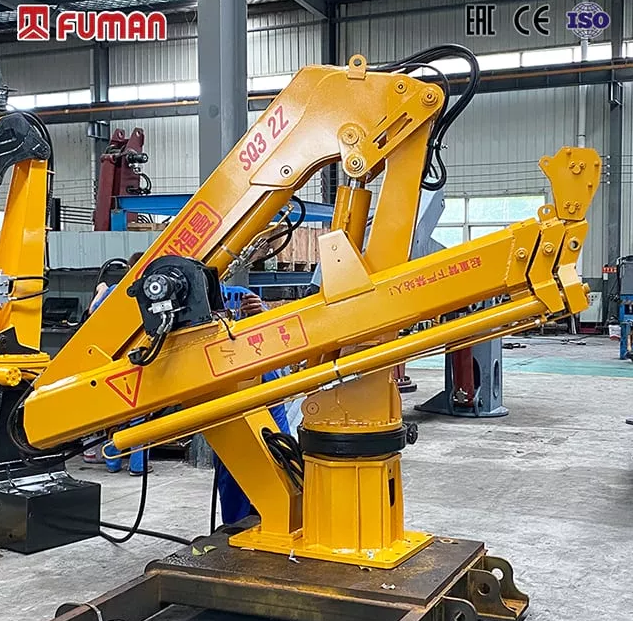
Folding Crane Booms
Folding booms are designed to fold into a compact shape when not in use. They usually feature articulated joints controlled hydraulically, enabling the boom to fold in sections. This design combines the benefits of extendability and ease of transport. Folding booms are perfect for confined spaces or situations where the crane needs to be moved frequently between sites. They are common on smaller vessels or mobile cranes operating in restricted environments like ship decks or offshore rigs.
Fixed Crane Booms
Fixed booms have a rigid, non-extendable structure. They are often used in applications where the reach does not need to change, such as in certain port or dockside cranes. These booms are designed for stability and high lifting capacity, often supporting large loads in a fixed position. Their simplicity makes them reliable and easy to maintain. Fixed booms are suitable for repetitive tasks like loading ships with similar-sized cargo or handling bulk materials.
Applications of Marine Crane Boom
Marine crane booms play a vital role across many industries, thanks to their strength, flexibility, and precision. Their ability to lift heavy loads in tough environments makes them indispensable in various marine and coastal operations.
Construction Industry
In construction, marine crane booms help build offshore platforms, bridges, and coastal structures. They lift heavy materials like steel beams, concrete blocks, and prefabricated parts from ships or barges to the construction site. Their telescopic or lattice designs allow precise placement even in limited spaces. For example, when building offshore wind farms, marine cranes lift and position massive turbine components with accuracy. Their robust design withstands harsh weather and saltwater exposure, ensuring reliable performance throughout long projects.
Shipping and Logistics
Ports and shipping yards depend heavily on marine crane booms for loading and unloading cargo. These booms handle containers, bulk goods, and oversized items efficiently. Telescopic booms extend reach to stack containers high or reach across ships. Lattice booms provide the strength needed for heavy loads. Automated control systems in modern cranes optimize handling speed and safety, reducing turnaround times for vessels. This efficiency keeps global supply chains moving smoothly.
Emergency Services
Marine crane booms assist emergency responders in rescue and recovery operations. They help remove debris after storms or accidents, lift stranded vessels, and reach difficult locations. For instance, during flood rescues, cranes equipped with telescopic booms can reach victims trapped on rooftops or isolated areas. Their precise control allows safe handling of fragile or hazardous materials, protecting both victims and responders.
Ports and Logistics
Beyond shipping, ports use marine crane booms to manage diverse cargo types and maintain smooth logistics flow. Cranes transfer goods between ships, trucks, and storage areas, often working around the clock. Their ability to adjust boom length and angle enables handling of different cargo sizes and shapes. Folding booms can fold away when not in use, saving space on crowded docks. Integration with warehouse management systems allows seamless coordination, boosting overall efficiency.
Materials Used in Marine Crane Boom Construction
Marine crane booms are built to withstand harsh environments, heavy loads, and frequent use. Their durability and strength depend heavily on the materials chosen for their construction. The most common materials include high-strength low-alloy steel, carbon fiber composites, and specialized surface treatments.
High-Strength Low-Alloy Steel
High-strength low-alloy (HSLA) steel is the backbone of most marine crane booms. This steel type offers an excellent balance of strength, weldability, and corrosion resistance. It allows the boom to support heavy loads while remaining relatively lightweight, which is critical for mobile and offshore applications. HSLA steel’s toughness helps it resist cracking under stress, and its resistance to corrosion reduces maintenance needs in salty, humid marine environments. This steel is often treated with additional coatings to further enhance its durability, ensuring the boom can perform reliably over many years of service.
Carbon Fiber Composites
In recent years, carbon fiber composites have gained popularity in crane boom construction. These advanced materials are significantly lighter than steel, reducing the overall weight of the boom. This weight reduction translates into easier transportation, quicker assembly, and lower energy consumption during operation. Despite being lightweight, carbon fiber composites provide high strength and stiffness, making them suitable for critical load-bearing parts. They also exhibit excellent vibration damping, which helps stabilize loads during lifting. However, their higher cost means they are typically used in specialized applications or where weight savings are paramount.
Surface Treatment and Durability
Regardless of the base material, surface treatment plays a vital role in extending the lifespan of marine crane booms. Multi-layer coating systems, including primers, paints, and sealants, protect against corrosion, rust, and environmental damage. These coatings form a barrier that prevents moisture, salt, and other corrosive agents from reaching the metal surface. Regular maintenance, including inspections and re-coating, is essential to preserve these protective layers. Additionally, surface treatments like galvanization or anodizing may be applied to further enhance resistance to corrosion, especially for booms exposed to extreme marine conditions.
Maintenance and Safety Considerations
Regular Inspections and Maintenance
Regular inspections are vital for keeping marine crane booms operating safely and efficiently. Before each shift, operators should perform visual checks for signs of wear, corrosion, or damage on critical components like hydraulic cylinders, locking mechanisms, cables, and sheaves. These daily inspections help catch issues early, preventing costly failures or accidents.
Periodic thorough inspections by qualified technicians are equally important. These comprehensive checks involve ultrasound testing of steel components to detect internal flaws, inspecting welds for cracks, and verifying the integrity of locking devices. Maintenance schedules should follow manufacturer recommendations and safety regulations, with detailed logs kept for all inspections and repairs.
Lubrication plays a significant role in reducing wear and preventing corrosion. Moving parts like rollers, guide rails, and locking pins require regular lubrication using high-quality, marine-grade lubricants. Automated lubrication systems can be installed to ensure consistent maintenance of critical points, especially in harsh marine environments.
Operator Training and Certification
Operating a marine crane boom demands specialized skills and knowledge. Proper training ensures operators understand the crane's mechanics, safety features, and emergency procedures. Certification from recognized authorities confirms their competence, which is often a legal requirement in many jurisdictions.
Training programs typically cover safe operation practices, load calculations, and emergency response protocols. Operators learn to interpret safety signals, use control systems effectively, and recognize signs of equipment overload or malfunction. Continuing education keeps operators updated on new technologies, safety standards, and best practices.
Well-trained operators reduce the risk of accidents, equipment damage, and downtime. They are also better equipped to handle unexpected situations like sudden weather changes or equipment failures, maintaining safety for everyone on board.
Common Safety Precautions
Safety precautions are essential to prevent accidents during crane operation. Always stabilize the crane with outriggers before lifting heavy loads. Outriggers distribute the load and prevent tipping, especially in uneven or unstable terrains.
Operators should constantly monitor load weights, ensuring they do not exceed the crane's rated capacity. Load moment indicators (LMI) provide real-time feedback, alerting operators if they approach dangerous limits. Never ignore these warnings.
Be aware of environmental factors such as wind speed. Wind gauges help determine safe lifting conditions; operations should cease if wind exceeds safe thresholds, usually around 20-30 mph. This prevents load swinging or tipping caused by gusts.
Clear communication with ground personnel is crucial. Use standard hand signals or radios to coordinate movements, ensuring everyone understands the plan. Never leave the crane unattended during lifting, and always engage emergency stop controls if necessary.
Regularly check safety devices like anti-two block systems, which prevent the hook from contacting the boom tip. These prevent damage and potential accidents. Also, ensure all safety signage and warning labels are visible and legible.
Finally, always follow manufacturer guidelines and legal regulations. Adhering to these standards helps maintain a safe working environment, reduces liability, and prolongs equipment lifespan.
Future Prospects and Innovations
Marine crane booms are evolving rapidly, driven by advances in technology and growing demands for efficiency, safety, and sustainability. The future holds exciting developments in digitization, automation, energy efficiency, and artificial intelligence integration.
Digitization and Automation
Digital technology is transforming how marine crane booms operate. Sensors embedded throughout the boom continuously collect data on load weight, boom angle, hydraulic pressure, and environmental conditions. This data feeds into control systems that enable real-time monitoring and predictive maintenance. Operators receive alerts before any component reaches a critical state, reducing downtime and repair costs.
Automation is also increasing. Advanced control algorithms assist operators by stabilizing loads, optimizing boom movement paths, and adjusting speed based on conditions. Some systems support semi-autonomous or fully autonomous operation, especially in repetitive tasks like container handling at ports. This reduces human error, enhances precision, and improves overall safety.
Networked cranes can coordinate their movements through digital platforms, optimizing workflow and minimizing waiting times during complex lifting operations. Integration with vessel and port management systems streamlines logistics, improving efficiency across the supply chain.
Sustainability and Energy Efficiency
Sustainability is becoming a core focus in marine crane boom design. Energy-efficient hydraulic drives and electric motors reduce power consumption. Regenerative braking systems capture energy during boom lowering or trolley deceleration, storing it for future use. This lowers fuel use and emissions, contributing to greener marine operations.
Lightweight materials and innovative structural designs reduce the boom’s dead weight, decreasing the energy needed for movement. High-strength alloys and composites allow slimmer yet stronger booms. Surface treatments that extend component life also reduce waste and maintenance frequency.
Some manufacturers explore hybrid power systems combining batteries and traditional engines, enabling cranes to operate on cleaner energy, especially in port environments where emissions regulations are strict.
Integration of Artificial Intelligence
Artificial intelligence (AI) is poised to revolutionize marine crane boom operations. AI algorithms analyze sensor data to optimize lifting sequences, predict maintenance needs, and detect anomalies that human operators might miss. Machine learning models improve over time, adapting to specific operational patterns and environmental factors.
AI can enhance safety by instantly recognizing hazardous situations, such as excessive load sway or dangerous weather conditions, and triggering automatic shutdowns or corrective actions. It can also assist operators by providing decision support, suggesting optimal boom configurations or load handling strategies.
In the future, AI-driven cranes might fully automate complex lifts, freeing operators to focus on supervision and emergency response. This will increase productivity while maintaining the highest safety standards.
Conclusion
Marine crane booms operate using hydraulic systems and telescopic mechanics, ensuring precise lifting in challenging environments. They are vital in modern industries like construction and shipping, offering strength and flexibility. Future developments include digitization, automation, and AI integration, enhancing efficiency and safety. FUMAN's marine crane booms provide exceptional value by incorporating these advanced features, meeting the demands of today's industries while preparing for tomorrow's challenges.
FAQ
Q: What is a marine crane boom?
A: A marine crane boom is a structural component of a crane designed to lift and move heavy loads on ships and offshore platforms, using telescopic sections and hydraulic systems for efficient operation.
Q: How does a telescopic marine crane boom work?
A: A telescopic marine crane boom works by using hydraulic cylinders to extend or retract nested sections, allowing the boom to adjust its length and reach varying distances safely and precisely.
Q: Why are locking mechanisms important in marine crane booms?
A: Locking mechanisms are crucial in marine crane booms as they securely hold extended sections in place, preventing unintended movements and ensuring stability and safety during lifting operations.


